

Sedation for Oral Surgery in Atlanta
IV sedation, laughing gas, oral sedation and local anesthesia, with Dr. Okhiria helping you find the best fit for your health and your procedure.
Sedation is only offered in the office when it's safe for you. When it isn't, we arrange an anesthesiologist or a hospital setting.

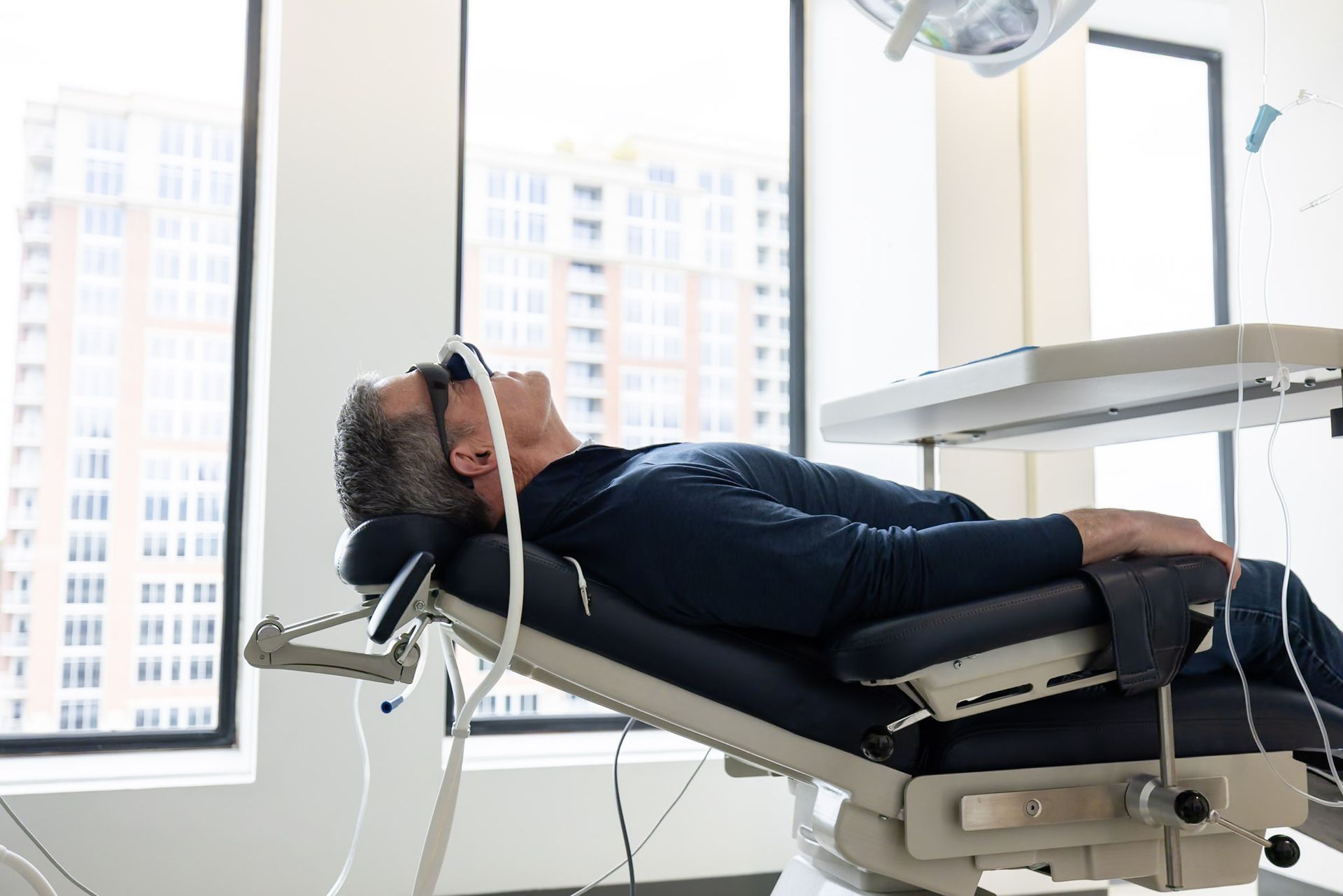
Prepared for what could go wrong
Dr. Okhiria has given thousands of sedations, and her team checks the equipment and emergency medications every week and every month and runs mock emergency drills every quarter. "It's not about what happens when things go right," she says. "It's more about what happens when things go wrong." Before offering any sedation, she reviews your full medical history. "I don't take risk. If I feel like something is risky, I'm not going to do it."
From laughing gas to IV sedation
Local anesthesia numbs the area completely, so sedation is about how you feel, not about pain. Laughing gas, breathed through a small nose piece, relaxes you within a few minutes and wears off quickly. Oral sedation is a calming medication, similar to Valium, taken before your appointment. IV sedation, given through a small line in your arm, leaves you deeply relaxed while you breathe on your own, and most patients remember little or nothing afterward. It is not general anesthesia, which puts you fully to sleep with a breathing tube. Our guide to IV sedation vs laughing gas compares them side by side.
Getting ready and getting home
Bring your full medication list to the consult, and you'll get written instructions about eating, drinking and medications before your appointment. After laughing gas, many adults can drive themselves home. After oral or IV sedation, an adult needs to drive you, and after IV sedation they should stay with you for the rest of the day, with no driving or important decisions until the next day. Plan to rest for the remainder of the day and let someone else handle dinner.
Finding the best anesthesia for you
The right choice depends on the procedure, your health and how anxious you feel. Short, simple procedures often only need local anesthesia and laughing gas, while longer surgery like wisdom teeth and implants usually calls for IV sedation. Dr. Okhiria trained in a hospital setting that included general surgery and is a Fellow of the American College of Surgeons. "A good preclinical workup and consultation is absolutely vital before we just put anybody to sleep," she says, and every sedation patient has that consult first. If anything feels uncomfortable at any point, tell our team and they'll pause right away.
At the consult, she reviews your health history and medications, explains how each option would feel for your procedure, and recommends the one that fits you, not a default.
A safe plan for every patient
Some health conditions make sedation in the office a poor choice, and Dr. Okhiria will tell you so. The other options are having an anesthesiologist come in for your procedure, or doing it in a hospital, where she holds privileges. For kids and teens, short procedures are usually done with local anesthesia and laughing gas, which works quickly and wears off fast.
Request a consult
Send a request and our team will call you to find a time. Most patients come with a referral from their dentist, and you're welcome without one.