

Wisdom Teeth and Tooth Extractions in Atlanta
The work Dr. Okhiria does most: wisdom teeth, teeth that can't be saved, and surgery for kids and teens before braces.
Every extraction starts with a CBCT scan and ends with written aftercare and a follow-up call from the surgeon.
Easier when you're young and healthy
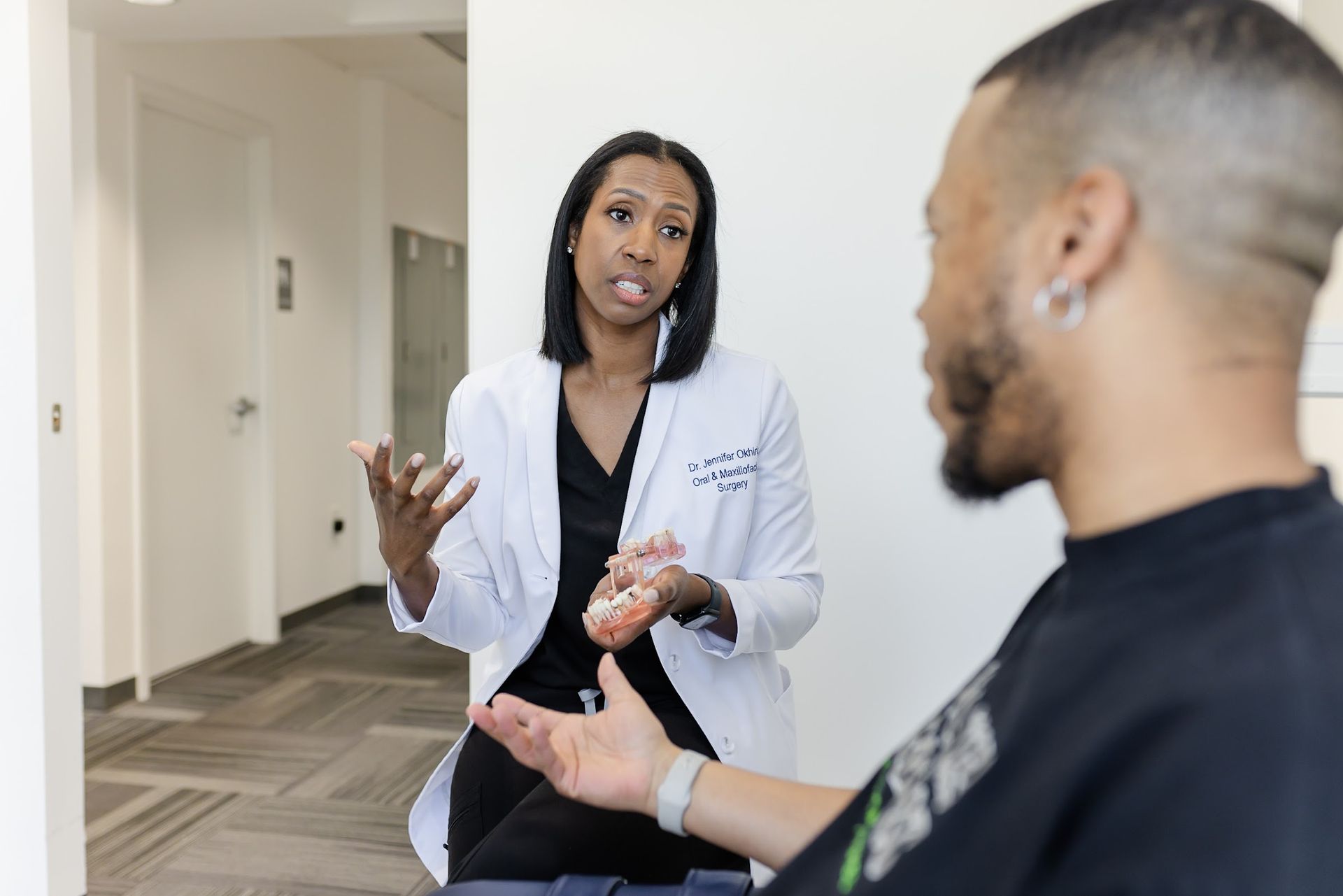
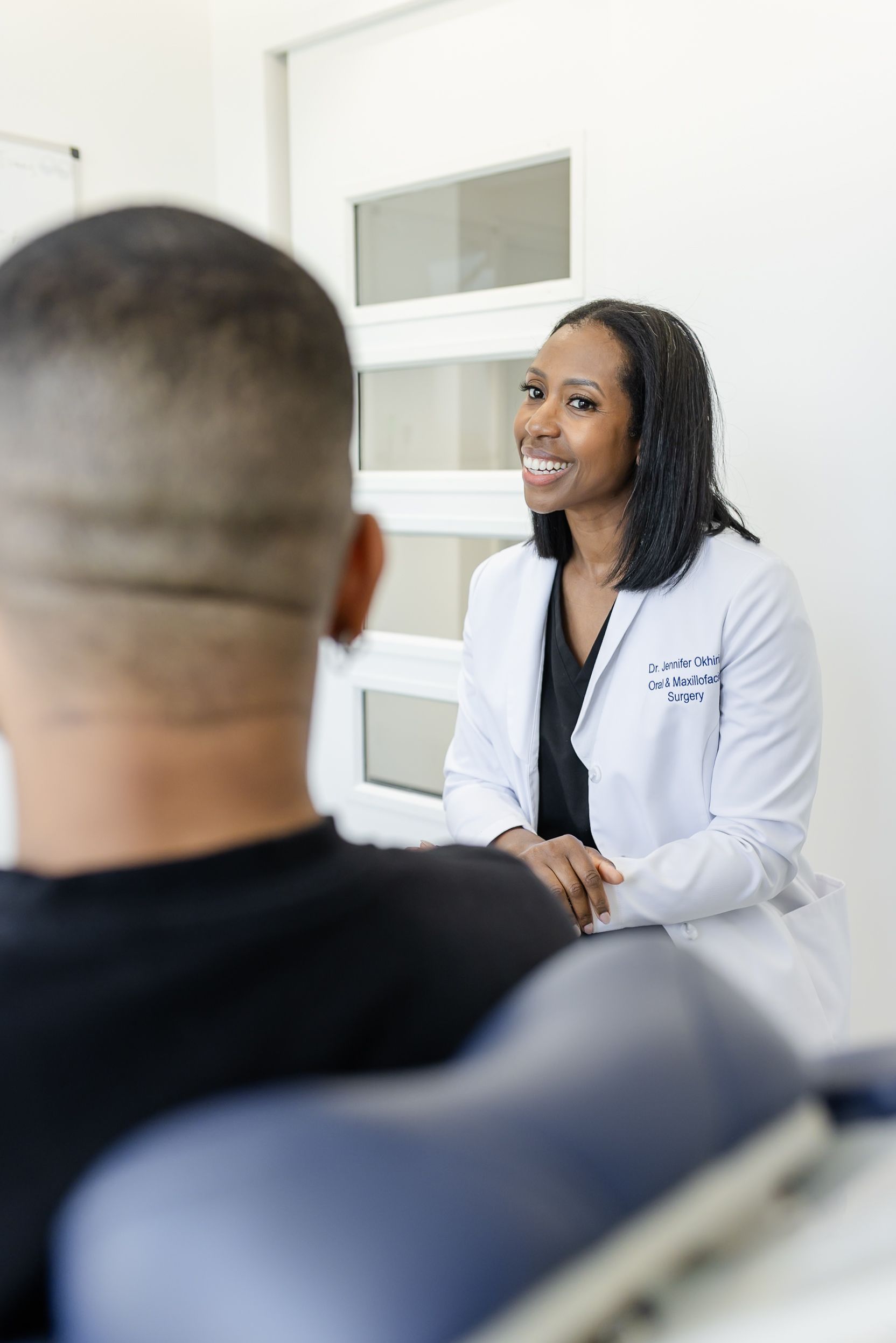
Wisdom teeth that don't have room often come in partway, trap food and get infected, or push on the teeth in front of them, and much of that happens before anything hurts. "By the time it bothers the patients, it's typically too late," Dr. Okhiria says. Removal is usually easier and healing faster in younger patients, which is why she recommends taking problem wisdom teeth out while patients are young and healthy, and why she'll tell you just as clearly when yours look fine to leave alone. Our guide to wisdom teeth that don't hurt explains how she decides.
Mapping every tooth and nerve first
Every extraction starts with a CBCT scan, a 3D image that shows where each tooth sits and how close a lower wisdom tooth is to the nerve that gives feeling to your lip and chin. Dr. Okhiria plans around that nerve before surgery day and shows you the scan on a big screen. When all four wisdom teeth need to come out, she usually recommends one visit, so you have one recovery to plan around instead of several.
Planning what replaces a tooth
When a tooth can't be saved because of deep decay, a fracture or infection, your dentist has usually already tried or ruled out a filling, crown or root canal. If Dr. Okhiria thinks the tooth still has a chance, she'll send you back to your dentist to try. If it does need to come out, she plans the next step first: a bone graft placed the same day keeps the bone from shrinking for a future implant, and when several teeth come out at once, an immediate denture made by your dentist can go in at the same visit.
Kids and teens are often referred by their orthodontist for a baby tooth that is blocking an adult tooth, an extra tooth, or an adult tooth that is stuck under the gum. Dr. Okhiria, a mom of three, prefers to watch and wait when that's safe and times surgery with the braces. "I'm always thinking, if it were my child, what would I do?"
Comfortable on the day,
supported after
You can choose local anesthesia, laughing gas or IV sedation, and most patients choose IV sedation for wisdom teeth. If you have sedation, an adult needs to drive you home. Plan on soft foods for about five to seven days; most people are back to school or work in two to four days, and the sockets heal over about one to two weeks. You go home with written instructions, Dr. Okhiria calls to check on you herself, and our day-by-day recovery guide walks you through the week.
Request a consult
Send a request and our team will call you to find a time. Most patients come with a referral from their dentist, and you're welcome without one.