When Should You Worry About a Mouth Sore? Oral Biopsies in Atlanta
Most mouth sores are harmless and heal on their own, so it's natural to wait on one that doesn't. In Atlanta, the simple rule Dr. Jennifer Okhiria gives patients is this: if a sore, patch or lump hasn't gone away in two to three weeks, have it looked at. Most turn out to be nothing serious, and the ones that aren't are much easier to treat when they're found early.
A Mouth Sore That Needs a Closer Look
Canker sores, a bitten cheek or a burn from hot coffee usually heal within a week or two. A spot that lingers past that deserves an exam. The National Institute of Dental and Craniofacial Research says that if you have symptoms like a sore, lump, thick patch, or white or red patches for more than two weeks, you should see a dentist or a doctor. Dr. Okhiria's version is nearly the same: "once it does not go away after two to three weeks," it's time for an evaluation. She also cautions that trouble doesn't always look dramatic. "Oral cancer does not always look angry," she says. "It can be very subtle changes." So what counts as a subtle change?
Signs Worth Paying Attention To
Watch for a sore that won't heal, a white or red patch, a lump or thickened area, or bleeding with no clear cause. Numbness in the tongue or lip, trouble chewing or swallowing, or a denture that suddenly fits differently are also worth mentioning. None of these means cancer on its own; each is a reason to get a clear answer.
Risk Factors That Raise the Stakes
According to NIDCR, tobacco in any form, heavy alcohol use, HPV infection, sun exposure to the lips and being over 40 all raise the risk of oral cancer. If any of those apply to you, don't wait on a spot that isn't healing: let a professional take a look.
Waiting Versus Checking Early
It's tempting to give a sore "one more week." But a lingering spot that turns out to be harmless means a short visit, while a serious one found late is much harder to treat. Checking early is how you get peace of mind either way.
Inside an Oral Biopsy Visit
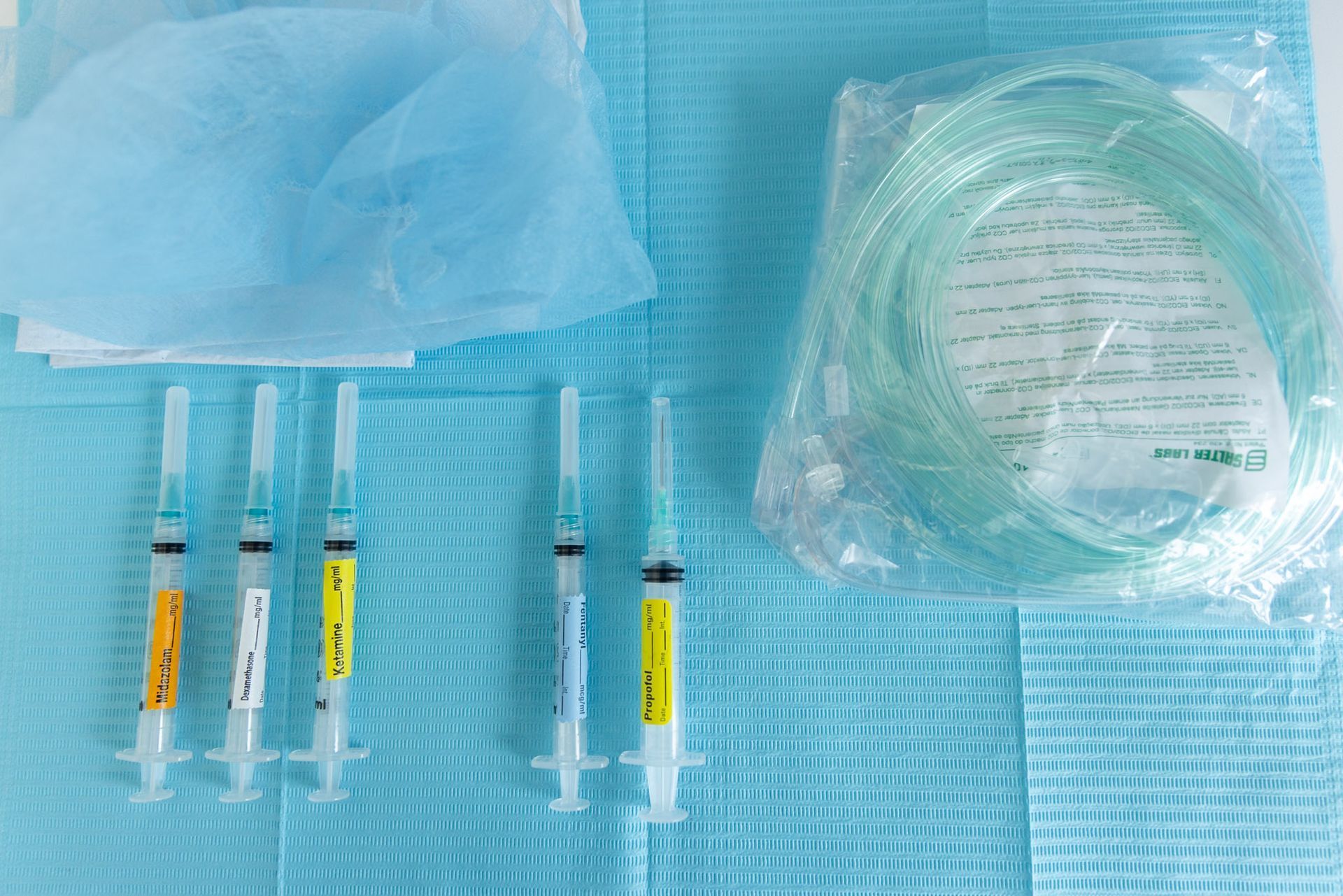
A biopsy means taking a small sample of tissue so a pathology lab can study it under a microscope, and it's the only way to know for certain what a suspicious area is. Dr. Okhiria first examines the spot and asks about how long it's been there and what might have caused it. If a biopsy is needed, the area is numbed, a small piece of tissue is removed, and a few stitches may be placed. Then comes the part people dread most, waiting for results, and Dr. Okhiria walks you through the pathology report herself and explains what it means for you, including any next steps. You can read more about an oral biopsy in Atlanta.
Biopsies With Dr. Okhiria in Buckhead
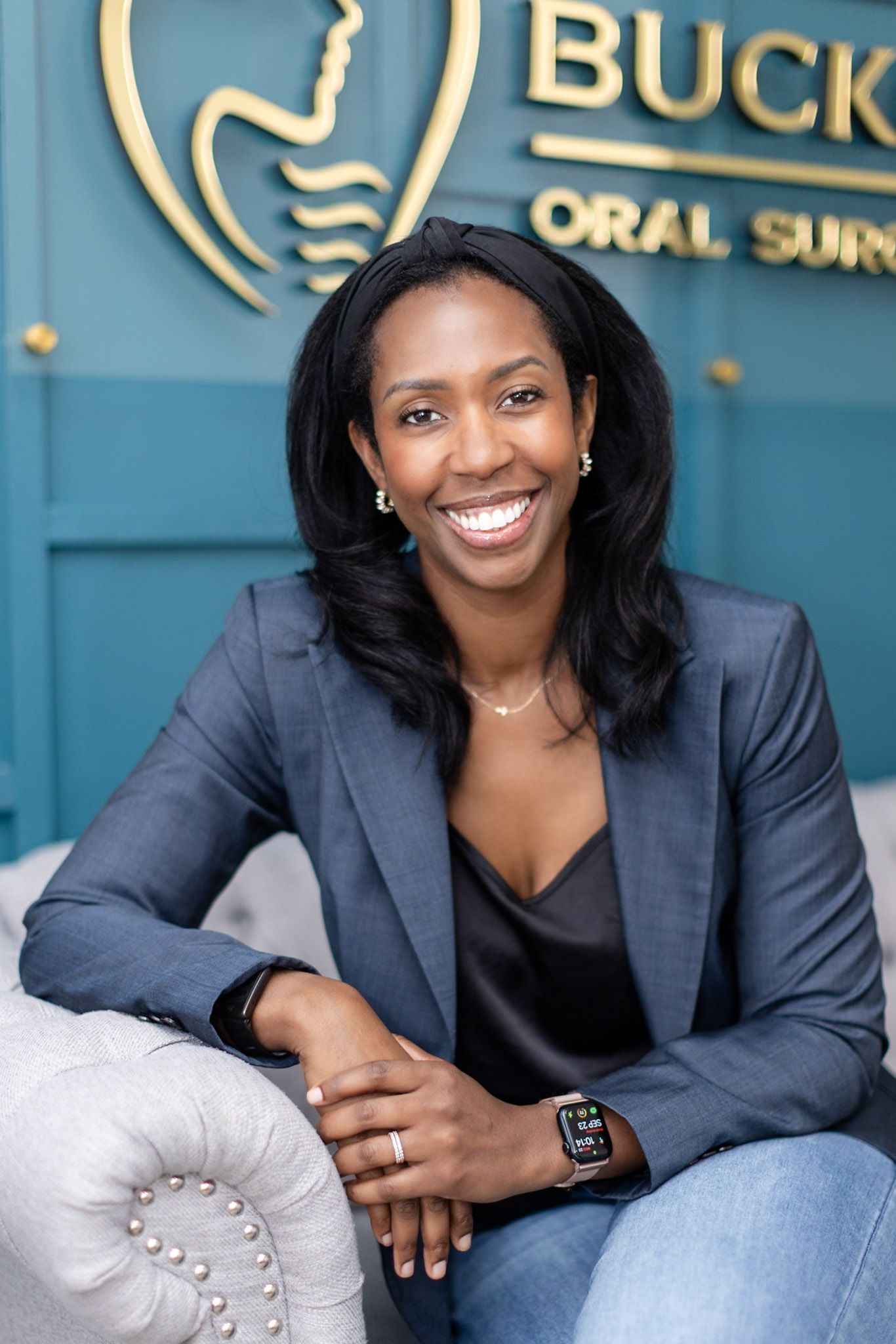
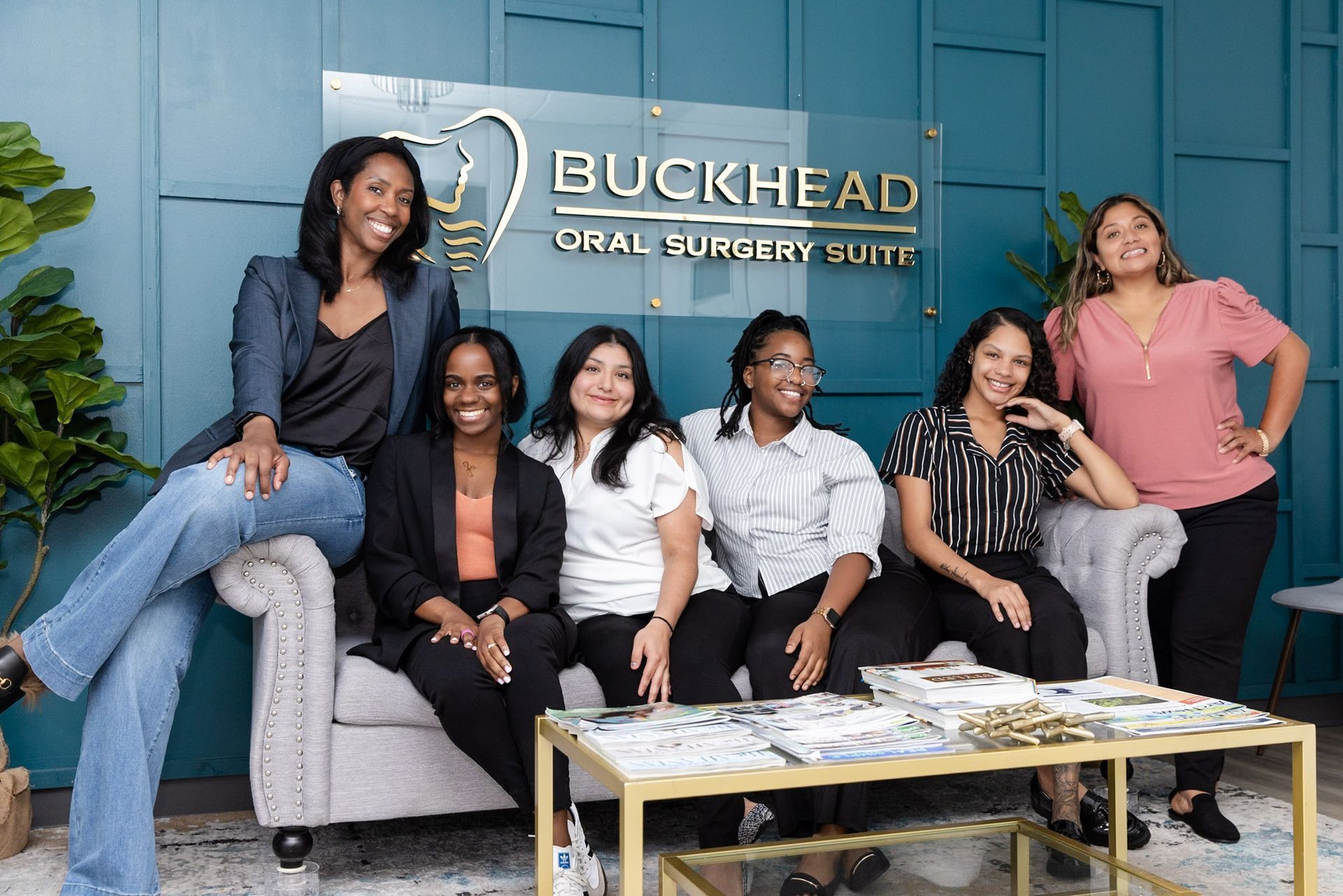
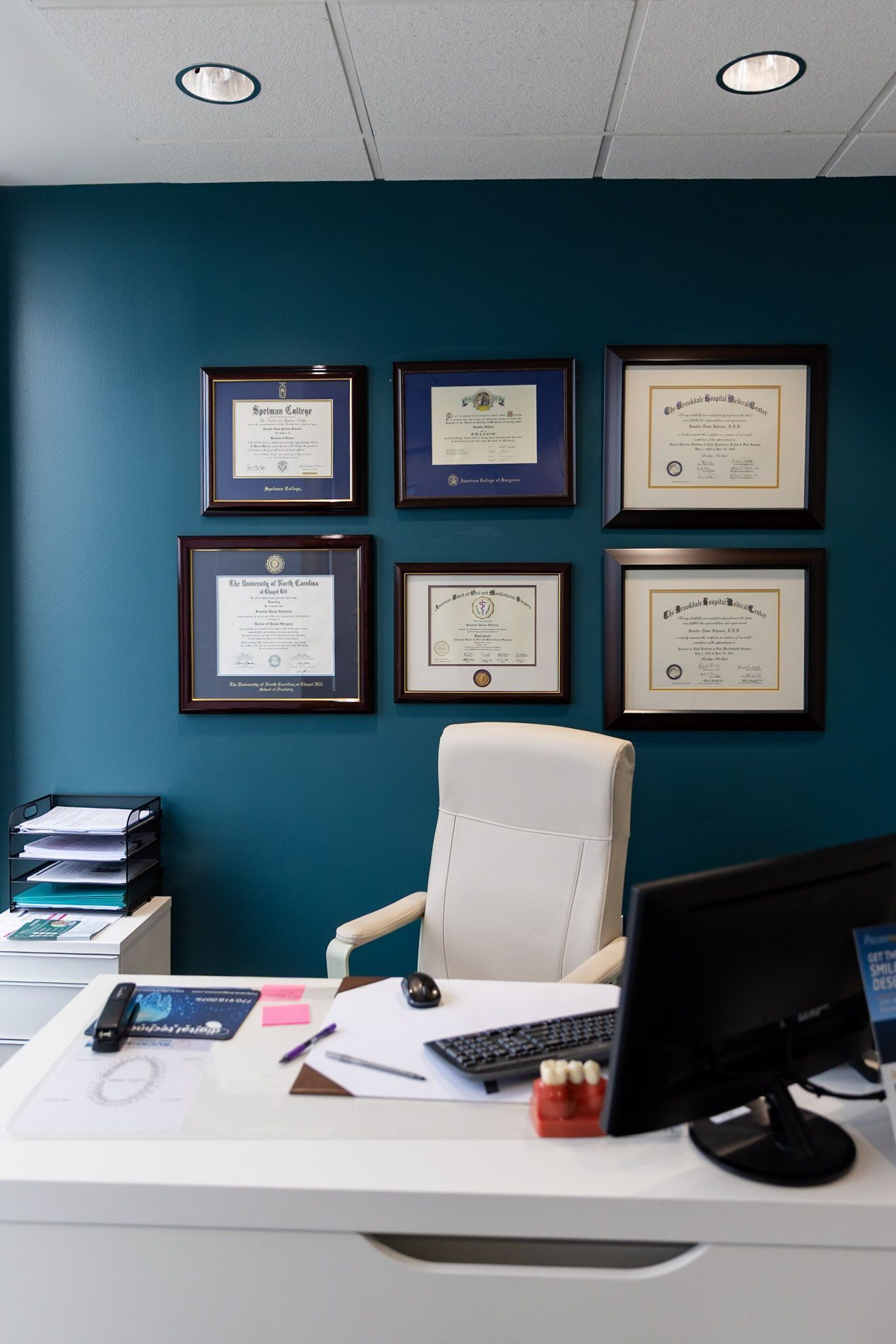
Dr. Okhiria is a board-certified oral and maxillofacial surgeon and a Fellow of the American College of Surgeons. Diagnosing and treating diseases of the mouth and jaw is part of her surgical training, and it's part of her regular work at The Buckhead Oral Surgery Suite. Many biopsy patients are referred by their general dentist, and she sends that dentist a clear report so everyone stays on the same page. Her office is on the eighth floor at 1800 Peachtree Road in Buckhead, and you'll hear from her directly after your procedure. If you've been watching a spot and wondering, you don't need a referral to ask.
Common Questions About Oral Biopsies in Atlanta
These are the questions Atlanta patients ask most often about mouth sores and biopsies.
When should I worry about a mouth sore?
If a sore, patch or lump hasn't healed in two to three weeks, have it examined. Most are harmless, but a lingering spot deserves a clear answer. At The Buckhead Oral Surgery Suite in Atlanta, Dr. Okhiria examines the area and recommends a biopsy only when it's needed to know for sure what it is.
Does an oral biopsy hurt?
The area is numbed first, so most patients feel pressure, not pain, during the biopsy. Afterward, the site may be tender for a few days, similar to a small cut in the mouth. Dr. Okhiria gives Atlanta patients written aftercare instructions and checks in after the procedure to see how you're healing.
How long do biopsy results take?
The tissue goes to a pathology lab, and timing depends on the lab and the testing your sample needs. Our team will tell you what to expect before you leave. At The Buckhead Oral Surgery Suite in Atlanta, Dr. Okhiria reviews the pathology report with you personally and explains what it means and what comes next.
Does a biopsy mean I have cancer?
No. A biopsy is how a surgeon finds out what an area is, and most results are not cancer. Many turn out to be irritation, infection or a harmless growth. Getting a biopsy in Atlanta replaces worry with a real answer, and Dr. Okhiria will talk you through the results either way.
Do I need a referral for an oral biopsy?
Many patients come to us through their general dentist, but you can request a consult directly. If your dentist has already noted the area, bring any recent X-rays or notes. At The Buckhead Oral Surgery Suite in Atlanta, Dr. Okhiria shares her findings with your dentist so your regular care stays coordinated.
Getting a Clear Answer About a Spot That Won't Heal
You don't have to keep guessing about a sore that's been hanging around. At a consult in Buckhead, Dr. Okhiria will examine the area, explain what she sees and tell you whether a biopsy makes sense. Call (470) 944-1881 or book a time online.